
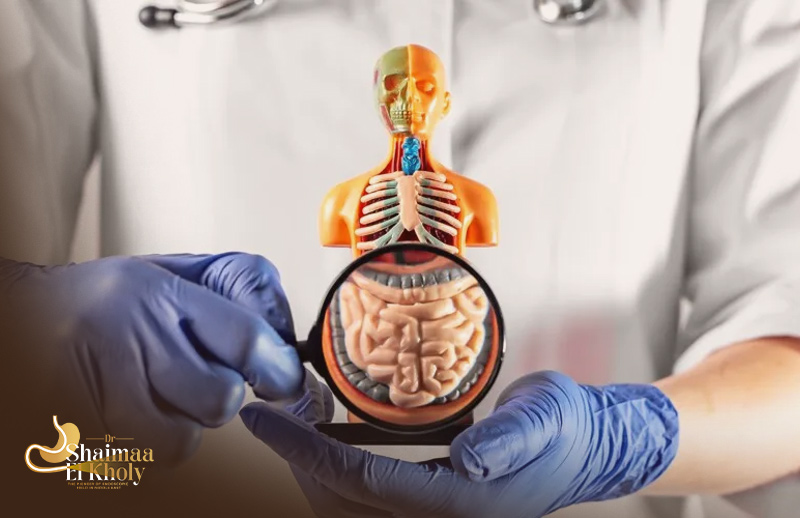
Early Detection of Colon Tumors and Polyp Removal
Removing polyps that can develop into cancer reduces the risk of colon cancer by up to 80%. These polyps can be found through a colonoscopy. Gastrointestinal cancers are among the most common cancers worldwide, with colon cancer being the primary cancer in this system, ranking third in incidence among various types of cancers.
Colon tumors can be prevented by Dr. Shaimaa El Kholy, Associate Professor of Advanced Interventional Gastrointestinal Endoscopy (ESD & Third Space Endoscopy) Faculty of Medicine, Cairo University, through gastrointestinal endoscopy, which allows for the diagnosis and removal of tumors in their early stages, whether they are benign (polyps), precancerous in 3 different grades, or the first grade of malignancy, ensuring safe longitudinal and horizontal margins. This is achieved using the Endoscopic Submucosal Dissection (ESD) technique.
What is the colon?
The colon is a tube that connects to the rectum and ends at the anus, forming the last part of the digestive system, which includes the mouth, esophagus, stomach, small intestine, and large intestine.
Parts of the colon through which waste passes:
• Cecum or ascending colon (on the right side).
• Transverse colon (crossing the abdomen).
• Descending colon (on the left side).
• Sigmoid colon
The cecum connects to the small intestine, while the sigmoid colon connects to the rectum. The function of the colon is to convert liquid waste into solid feces. Feces may remain in the colon for 10 hours to several days before being expelled through the anus.
What are colon polyps?
Colon polyps are growths on the inner lining of the colon. They are a type of tumor or mass of abnormal cells. Polyps can occur anywhere in the gastrointestinal tract, but they are most commonly found in the colon and rectum. Many of them are harmless, but some types can develop into cancer if not removed. For this reason, gastroenterologists look for benign tumors in the colon during a colonoscopy.
How common are colon polyps?
Colon polyps are quite common, especially as people age. They affect about 20% of adults overall, approximately 40% of those over 50, and around 6% of children. Individuals of all races and genders are at risk for developing colon polyps and colon cancer.
What is the percentage of cancerous colon polyps?
Most colon polyps have the potential to become cancerous, which is why gastroenterologists remove them during a colonoscopy before they have the opportunity to turn into cancer. Although polyps are not cancerous, almost all colon and rectal cancers start as polyps.
What are the symptoms of early tumors or colon polyps?
Most colon polyps, as well as many colon and rectal cancers, do not cause any symptoms. This is why screening is critically important. Typically, by the time symptoms appear, the polyps may have already progressed to cancer.
Potential symptoms, though they are uncommon, include:
• Signs of colon bleeding: Blood from the polyps can lead to blood in the stool. The bleeding may not be visible initially, but over time, the patient may develop anemia due to iron deficiency, causing symptoms like weakness and fatigue.
• Obstruction: Colon polyps can block the passage of stool through the intestines, leading to gastrointestinal obstruction.
• Nausea and vomiting: If the mass causes a bowel obstruction, abdominal pain and bloating can occur. If the obstruction is not treated, it can result in perforation, leading to a rupture of the colon wall; this is a medical emergency.
• Unexplained changes in stool: In rare cases, some individuals may suddenly experience chronic diarrhea, constipation, or excess mucus in the stool.
What causes colon polyps?
• Genetics: A person is more likely to develop colon polyps if he has a relative up to the fourth degree with a history of polyps.
• Environment: Environmental risk factors are behaviors and habits that can affect colon health, such as aging, smoking, a diet high in fat and low in fiber, lack of exercise, obesity, and diabetes.
How are colon polyps diagnosed?
The best way to find colon polyps is through a colonoscopy, which allows a physician to see inside the colon using a lighted camera. While other imaging tests can detect colon polyps, colonoscopy enables gastroenterologists to not only locate polyps but also remove them during the same procedure.
Dr. Shaimaa El Kholy uses tools passed through the colonoscope to remove benign tumors and sends them to the lab for further study to determine their type and check for cancerous cells. Depending on the lab results, a specific protocol is followed, and the patient may need periodic follow-ups at designated intervals.
Additional tests that may indicate the presence of colon polyps include:
• Blood tests: A complete blood count (CBC) may reveal anemia due to chronic bleeding.
• Stool tests: Fecal occult blood tests look for microscopic traces of blood.
• Barium enema: A lower gastrointestinal X-ray exam after a barium enema.
How are benign tumors or polyps related to colon cancer?
Most cases of colon cancer begin as polyps, but only some polyps progress to cancer.
It is normal for individuals to have polyps in the colon, ranging from none to a few. Gastroenterologists are concerned about the number of polyps present, as well as their size, location, and type. Because benign tumors grow very slowly, having fewer and smaller polyps indicates a relatively low risk of developing colorectal cancer.
How are benign tumors or polyps managed?
Polyps are managed by detecting and removing them during a colonoscopy using electrocautery. This means they are cut and cauterized to close the tissues and blood vessels, stopping any bleeding.
Removing polyps significantly reduces the risk of colon cancer, as polyp removal can lower the risk of developing colon cancer by up to 80%, as mentioned earlier.
Can colon polyps be prevented?
There is no way to prevent the genetic mutations that lead to colon polyps. However, you can reduce your risk through good general health practices. Eating healthy foods, decreasing animal fats, engaging in regular physical activity, and avoiding smoking can help prevent colorectal cancer.
How dangerous are colon polyps?
Colon polyps can be dangerous due to their potential to develop into cancer. However, most benign polyps are non-cancerous when discovered. Some may turn into cancer over time if left untreated. Dr. Shaimaa El Kholy, Associate Professor of Advanced Interventional Gastrointestinal Endoscopy (ESD & Third Space Endoscopy) Faculty of Medicine, Cairo University, removes them as soon as they are detected to prevent this.
Many people fear undergoing routine colonoscopy screenings and wonder if they can postpone them. It may seem like a waste of time to confirm you don’t have colon polyps. However, a colonoscopy is the best opportunity to diagnose and treat the disease before knowing about it.
It can be frightening to learn you have colon polyps, but many people have, and most will never develop cancer. A colon polyp found and removed is nothing to worry about. The important thing is to find and remove it early enough to prevent cancer from developing.