
The Importance of High-Resolution Esophageal Manometry
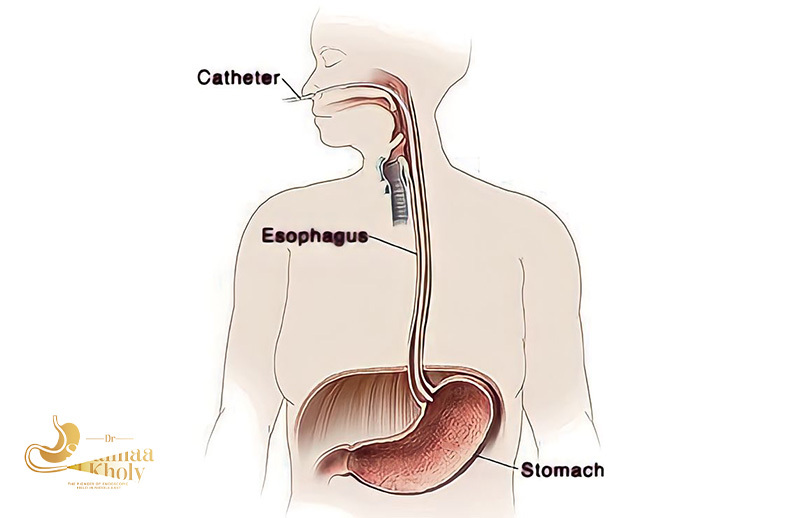
High-Resolution Esophageal Manometry (HRM) is a test that measures the pressure in the esophagus and the sphincter (a ring of muscles at both ends of the esophagus). The test utilizes a small tube (catheter) equipped with pressure sensors spaced 1 cm apart, allowing for simultaneous pressure measurement along the entire length of the esophagus and the sphincter. This setup allows for the evaluation of muscle function in the esophagus and sphincter, along with the coordination of contractions throughout the esophagus.
Why do you need to undergo High-Resolution Esophageal Manometry?
Dr. Shaimaa El Kholy, Associate Professor of Advanced Interventional Gastrointestinal Endoscopy (ESD & Third Space Endoscopy), Faculty of Medicine, Cairo University, recommends undergoing high-resolution esophageal manometry for the following reasons:
• The purpose of high-resolution esophageal manometry is to measure the pressure in the esophagus at rest and during swallowing, which reflects whether the esophagus is functioning normally.
• High-resolution esophageal manometry is the best test for diagnosing achalasia or dysphagia by ruling out other conditions with similar symptoms, such as gastroesophageal reflux disease (GERD) or tumors. This test also helps determine the type of achalasia the patient is experiencing.
• A high-resolution esophageal manometry is an evaluative tool for patients experiencing chest pain originating from the esophagus rather than the heart.
• The test provides valuable information and details about the length of the lower esophageal sphincter, helping to determine the best treatment plan for you, as no other tests offer this level of detail.
• This modern technique is currently employed in Egypt instead of classical esophageal manometry.
How to prepare for High-Resolution Esophageal Manometry?
• Do not eat or drink anything for 4 hours before the test (although you may drink water up to 2 hours prior).
• If you are taking medications for heart conditions, breathing issues, or hormone replacement therapy, please continue taking them as usual with a small amount of water.
What are the steps for performing High-Resolution Esophageal Manometry?
• You cannot sleep or be sedated during the procedure.
• You will be asked to sit upright.
• One of your nostrils will be numbed with a local anesthetic.
• A thin, flexible plastic tube equipped with pressure sensors will be passed through the numbed nostril, reaching the back of the throat and then into the esophagus during swallowing. As you keep swallowing, the tube will be gradually advanced into the stomach. There will be instructions for you to drink and swallow water to facilitate the tube's passage.
• After placing the tube within the esophagus, the pressures generated by the esophageal muscle will be measured at rest and during swallowing.
• You will then be asked to lie down (with a pillow under your head).
• You will be given small amounts (5 ml) of water to swallow approximately ten times. Pressure readings will be collected during the study.
• You may be asked to sit up and eat some food.
• Once the test is complete, the tube will be taken out, and you can leave safely.
• The tube insertion and test procedure take less than 60 minutes.
• Patients can usually resume their daily activities, eat, and take medications immediately after the test.
Are there any complications associated with High-Resolution Esophageal Manometry?
High-resolution esophageal manometry is not painful, as the nostril through which the tube is inserted has been anesthetized. Once the tube is in place, patients can talk and breathe normally.
The side effects of High-Resolution Esophageal Manometry are minor and include mild sore throat, temporary nasal discharge, and nasal bleeding. These effects usually resolve immediately after the tube is removed.